Plain language
What this result means
Negative results matter when they explain the boundary of the system. Here the benchmark is not soft: it is maintained by strong search methods, and the same operators that set the records find stable local optima. The useful output is a calibrated verifier and a map of why the table did not move.
- The verifier reproduces downloaded archive partitions exactly, including cuts and balance.
- The archive is closed under the simple monotonicity checks that produced free wins in other domains.
- The report points to future soft targets but does not package any cell as a win.
Visual notes
How to read the result
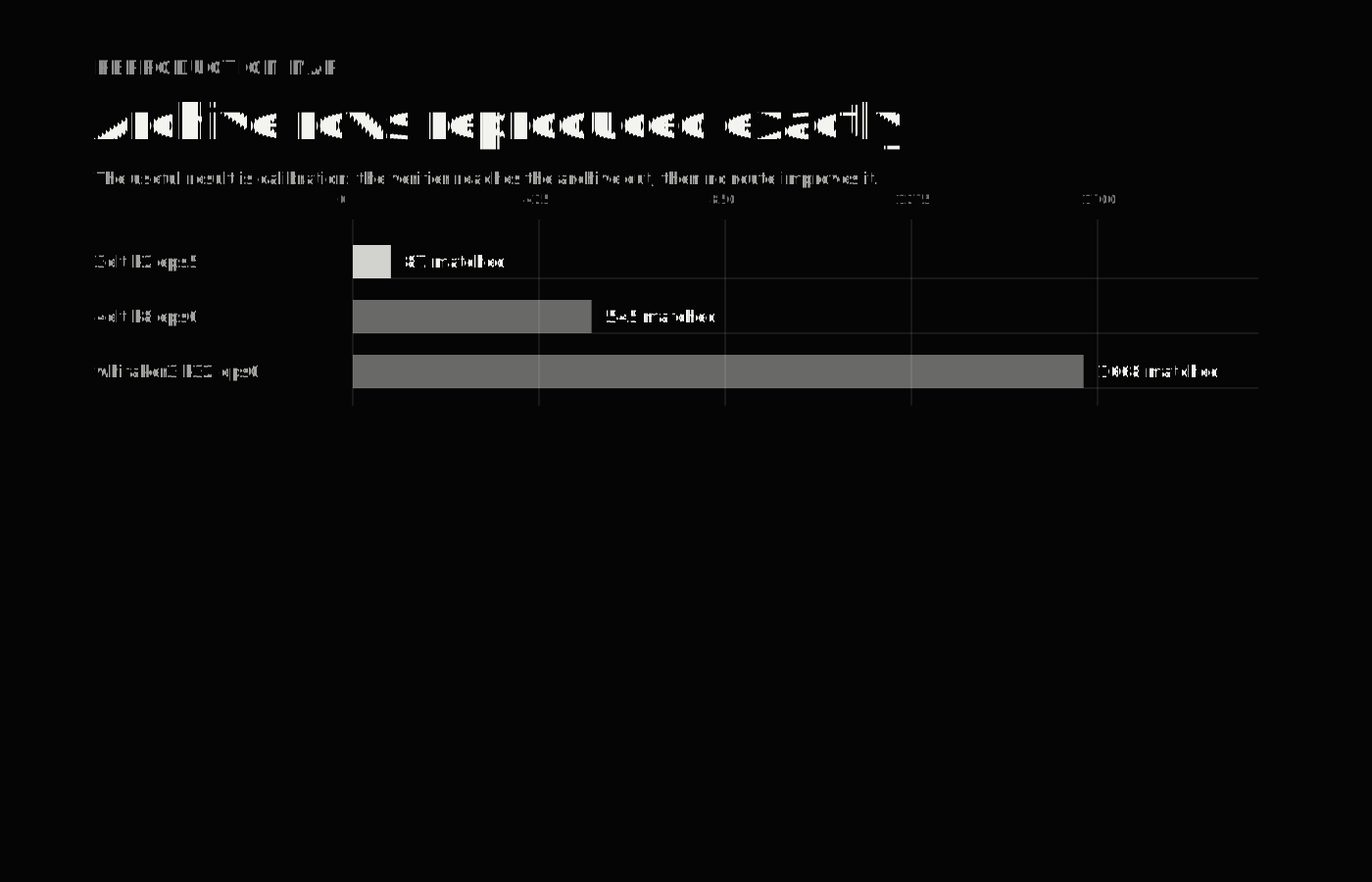
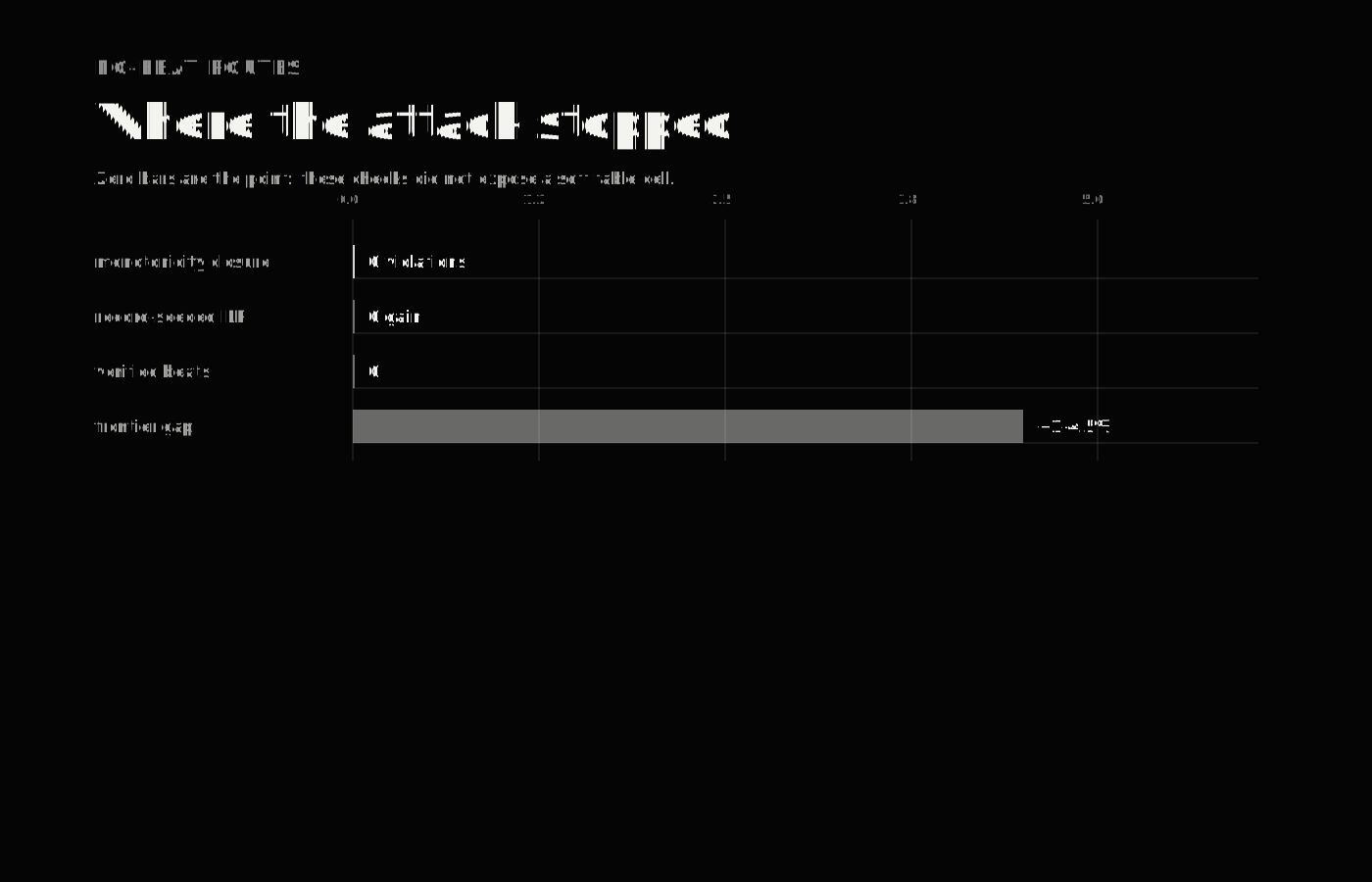
Result table
No verified beat: the archive remained match-hard under the available methods.
Method
How it was found
The pipeline combined archive parsing, KaHIP/KaFFPaE memetic partitioning, seeded reruns, monotonicity checks, and exact boundary-region CP-SAT refinement.
- Rebuilt the exact Walshaw balance rule from archive tables.
- Reproduced downloaded best partitions with an independent verifier.
- Ran strong partitioners and exact local ILP refinement.
- Recorded why each route matched or undershot rather than beat.
Verification
How it was checked
verify.py recomputes edge cuts and epsilon-balance directly from .graph and partition files, calibrated against archive downloads.
Scope
What is not being claimed
This is a calibration and negative-result report. It is intentionally not presented as a record win.
References
Baseline sources
Citation
How to cite
Numaro Autoresearch Team. "Walshaw graph partitioning: no record beat, useful calibration." Numaro Research Report NUMARO-CAL-2026-001, 2026.
@techreport{numaro2026WalshawGraphPartitioning,
  title = {Walshaw graph partitioning: no record beat, useful calibration},
  author = {Numaro Autoresearch Team},
  institution = {Numaro},
  number = {NUMARO-CAL-2026-001},
  year = {2026},
  url = {https://numaro.tech/research/walshaw-graph-partitioning-2026/}
}