Plain language
What this result means
Covering arrays are compact test suites: every t-way interaction still appears, but fewer rows means fewer tests. This result matters because it separates a promised size from a built object. The array has to exist before it can be a record.
- CA(N;t,k,v) means N rows, k columns, and v symbols. For every choice of t columns, all v^t tuples must appear somewhere.
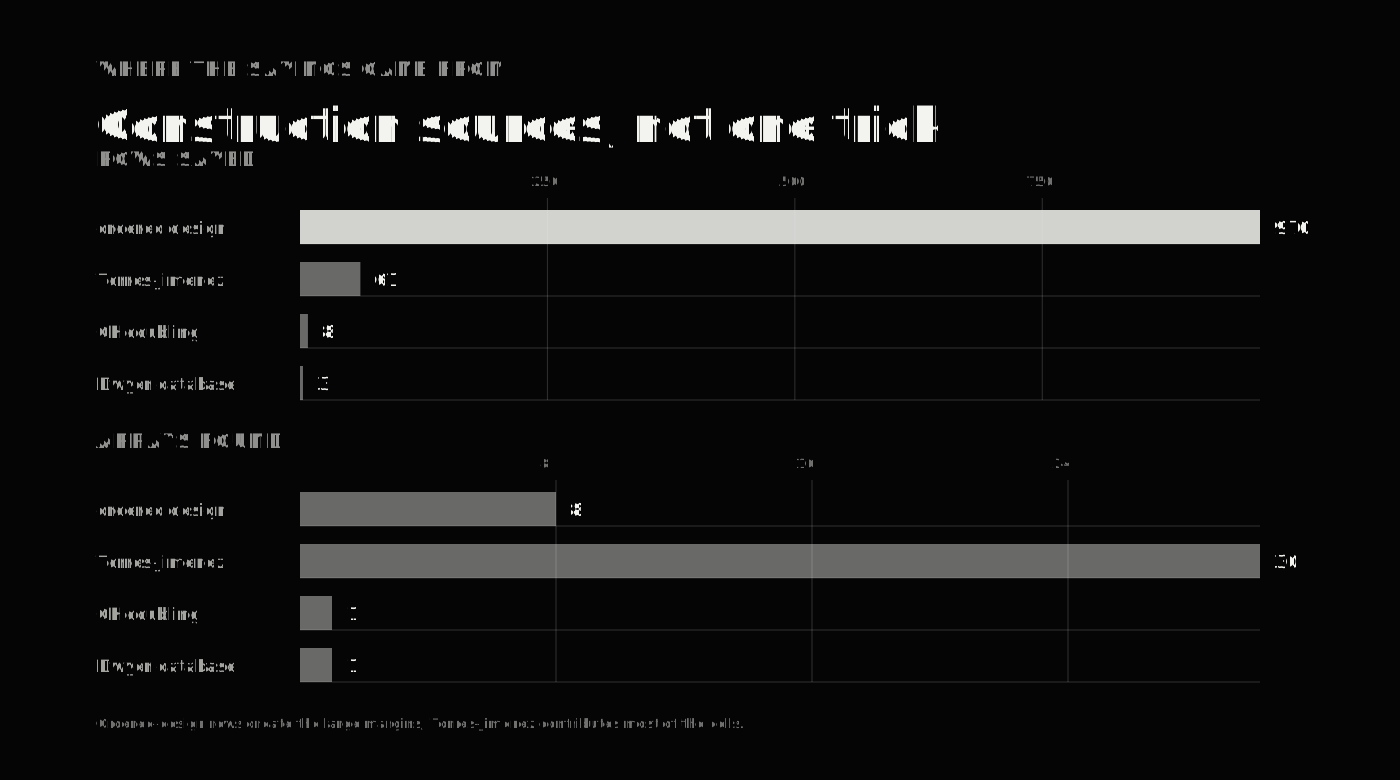
- The largest margins come from ordered-design constructions; most of the individual cells come from Torres-Jimenez binary arrays.
- Some attractive size predictions were rejected because they did not build at the claimed size. The kept rows are actual arrays.
Visual notes
How to read the result
Result table
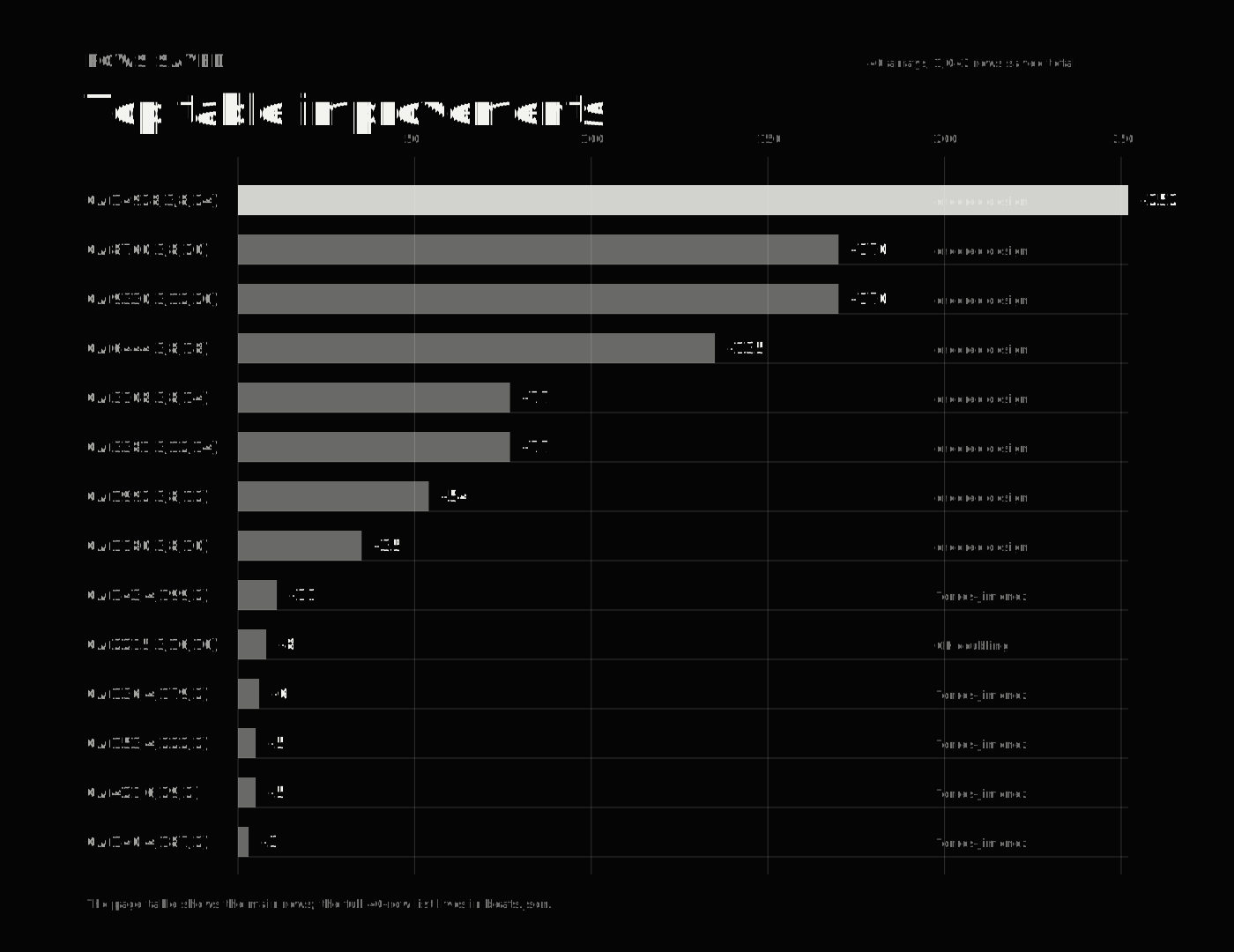
Forty explicit arrays lowered Colbourn table values.
| Cell | Baseline | Numaro | Delta | Note |
|---|---|---|---|---|
| CA(14928;3,8,24) | 15,180 | 14,928 | -252 rows | ordered design |
| CA(8760;3,8,20) | 8,930 | 8,760 | -170 rows | ordered design |
| CA(9330;3,12,20) | 9,500 | 9,330 | -170 rows | ordered design |
| CA(6444;3,8,18) | 6,579 | 6,444 | -135 rows | ordered design |
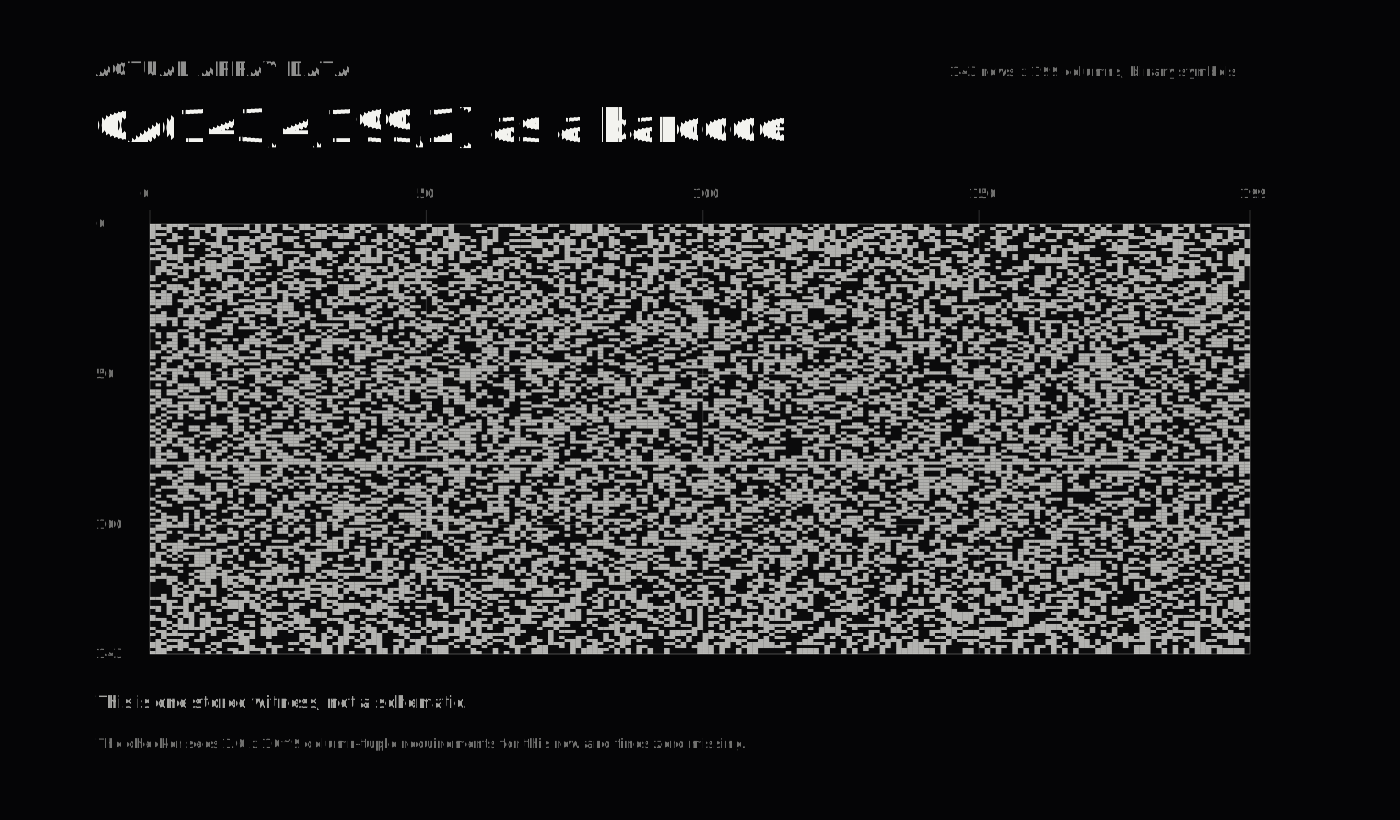
| CA(143;4,199,2) | 154 | 143 | -11 rows | Torres-Jimenez |
| CA(2215;3,16,10) | 2,223 | 2,215 | -8 rows | CK doubling |
| CA(421;6,29,2) | 426 | 421 | -5 rows | Torres-Jimenez |
| CA(2615;3,41,10) | 2,618 | 2,615 | -3 rows | Dwyer database |
Method
How it was found
The campaign compared listed CAN values against arrays obtainable from standard construction catalogues, then built the candidates and kept only arrays that actually checked out.
- Triple-confirmed the Colbourn baseline values from the mirror and CAs package data.
- Used construction catalogues to propose smaller N values.
- Materialized each candidate as an explicit array; predictions that failed to build at the claimed size were dropped.
- Checked every kept array against every column-subset and tuple requirement.
Verification
How it was checked
For each array, the checker reads the N x k table, checks that every entry is in the allowed symbol range, then tries every choice of t columns and confirms that all v^t tuples appear. All 40 kept arrays pass with zero missing requirements.
Scope
What is not being claimed
These are best-known improvements, not optimality proofs. The underlying arrays come from published constructions and catalogues. The contribution is detecting the table-beating cells, building the objects, and checking them from scratch.
References
Baseline sources
Citation
How to cite
Numaro AI Autoresearch Team. "Covering-array records improving Colbourn's best-known CAN tables." Numaro Research Report NUMARO-2026-007, 2026.
@techreport{numaro2026CoveringArraysColbourn,
  title = {Covering-array records improving Colbourn's best-known CAN tables},
  author = {Numaro AI Autoresearch Team},
  institution = {Numaro},
  number = {NUMARO-2026-007},
  year = {2026},
  url = {https://numaro.tech/research/covering-arrays-colbourn-2026/}
}