Plain language
What this result means
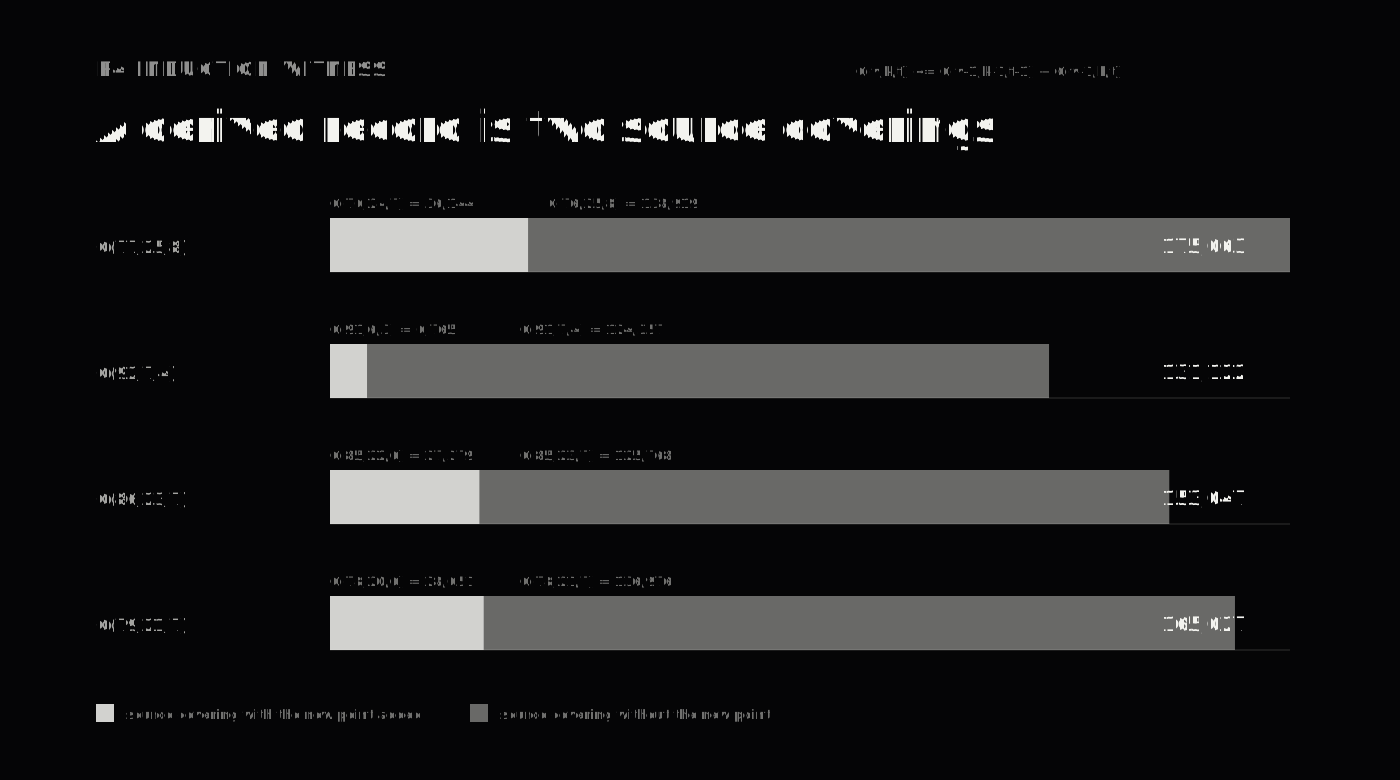
This result matters because the system treated the repository as a dependency graph, not just a list of numbers. A better source covering can imply a better derived covering. The record only counts after the derived object is actually built and checked.
- A (v,k,t)-covering is a set of k-point blocks. Every t-point subset must appear inside at least one block; fewer blocks is better.
- The four records come from the standard induction relation C(v,k,t) <= C(v-1,k-1,t-1) + C(v-1,k,t).
- This is not a claim that the source coverings are new. The win is detecting the unpropagated derived cells, materializing the witnesses, and checking them.
Visual notes
How to read the result
Result table
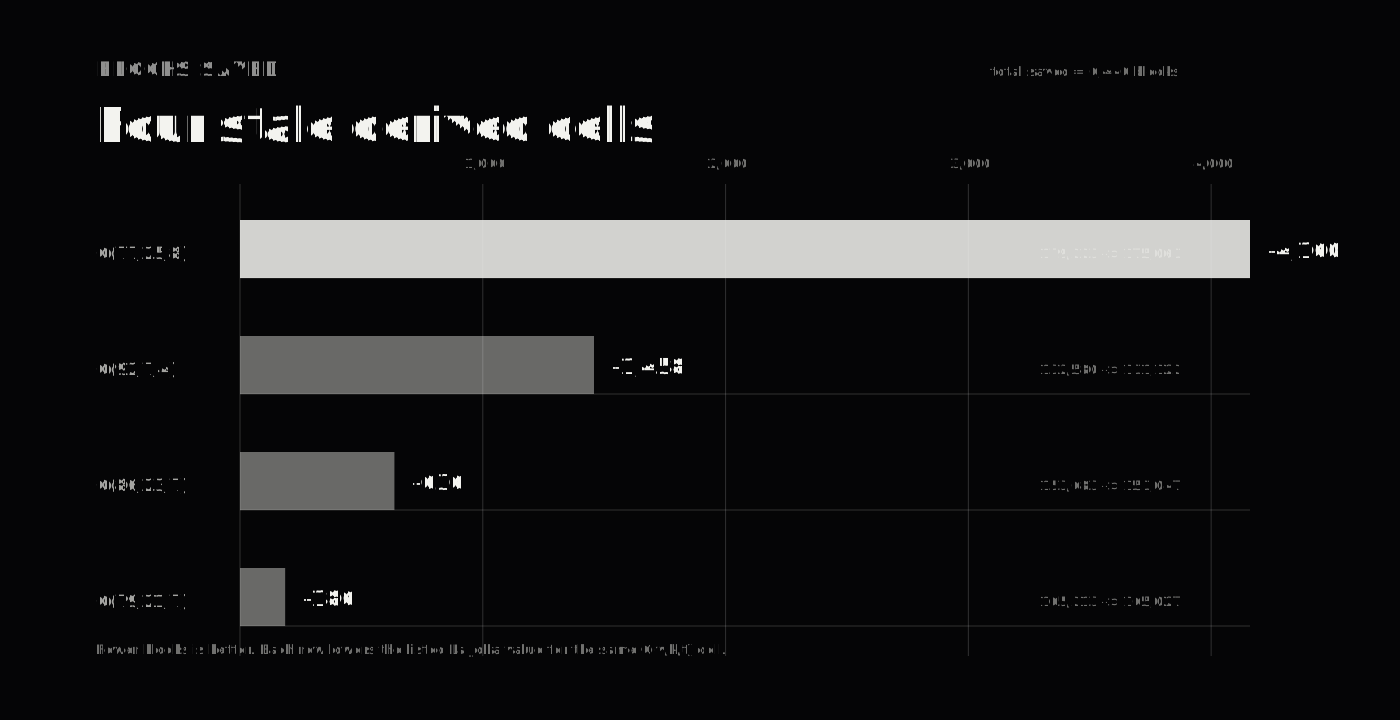
Four covering numbers lowered below the La Jolla table.
| Cell | Baseline | Numaro | Delta | Note |
|---|---|---|---|---|
| C(77,25,8) | 179,223 | 175,063 | -4,160 | R4 theorem (C(76,24,7) + C(76,25,8)) |
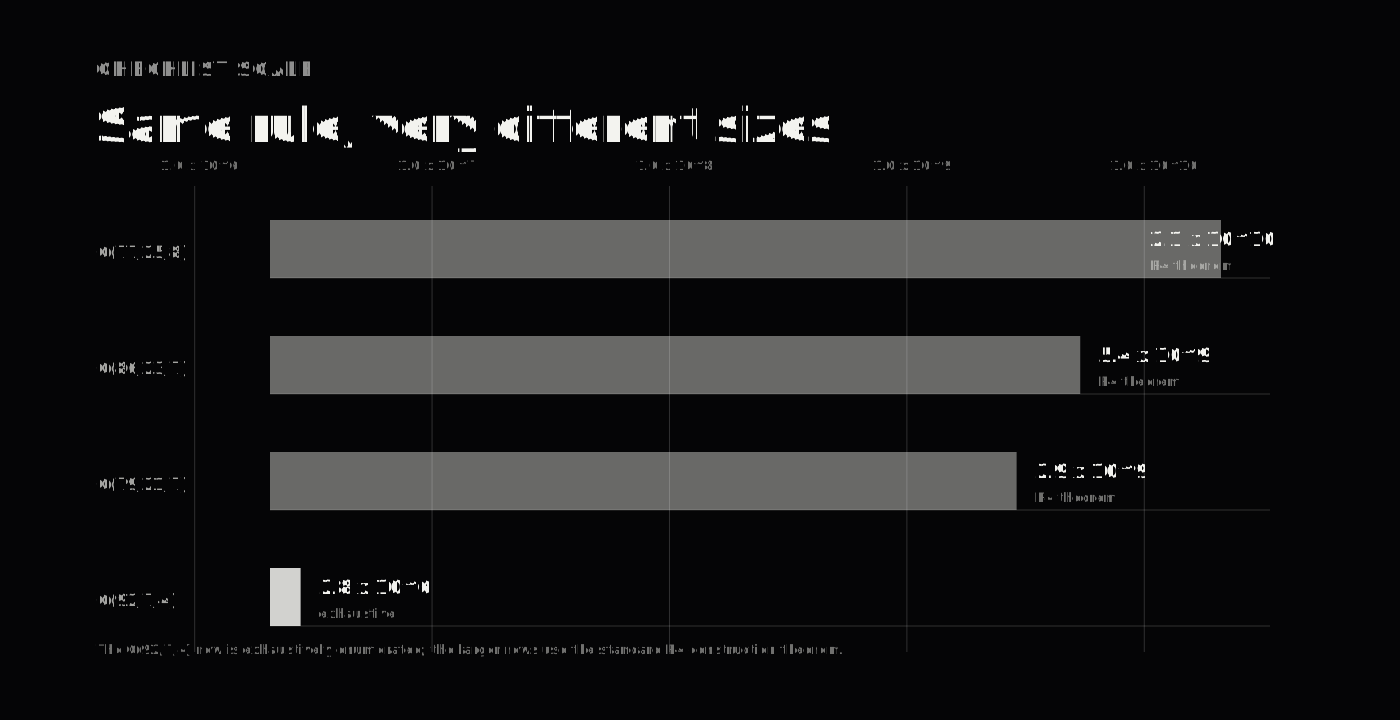
| C(92,7,4) | 132,580 | 131,122 | -1,458 | exhaustive: 2,794,155 subsets (C(91,6,3) + C(91,7,4)) |
| C(86,23,7) | 153,683 | 153,047 | -636 | R4 theorem (C(85,22,6) + C(85,23,7)) |
| C(79,21,7) | 165,213 | 165,027 | -186 | R4 theorem (C(78,20,6) + C(78,21,7)) |
Method
How it was found
The campaign parsed the LJCR table, propagated standard covering relations to a fixpoint, and kept the four cells where the current table lagged the induction construction.
- Fetched and parsed 9,482 LJCR entries.
- Applied delete-point, enlarge-block, reduce-t, and R4 induction relations.
- Built each derived covering from the two linked LJCR source coverings.
- Checked nearby mature cells with CP-SAT and simulated annealing; those attempts matched records but did not beat them.
Verification
How it was checked
Each candidate has to have the claimed number of blocks, the right block size, and points in the correct range. For C(92,7,4), every one of the 2,794,155 four-point subsets is checked directly. For the larger rows, the check rebuilds the two source counts and uses the standard induction theorem: subsets containing the new point are covered by one source; subsets not containing it are covered by the other.
Scope
What is not being claimed
These are best-known improvements, not optimality proofs. LJCR is a strong mature repository; the point here is a narrow propagation gap, not that the table is broadly weak. The underlying source coverings are not claimed as new.
References
Baseline sources
Citation
How to cite
Numaro AI Autoresearch Team. "Covering-design records improving the La Jolla Covering Repository." Numaro Research Report NUMARO-2026-006, 2026.
@techreport{numaro2026CoveringDesignsLa,
  title = {Covering-design records improving the La Jolla Covering Repository},
  author = {Numaro AI Autoresearch Team},
  institution = {Numaro},
  number = {NUMARO-2026-006},
  year = {2026},
  url = {https://numaro.tech/research/covering-designs-la-jolla-2026/}
}