Plain language
What this result means
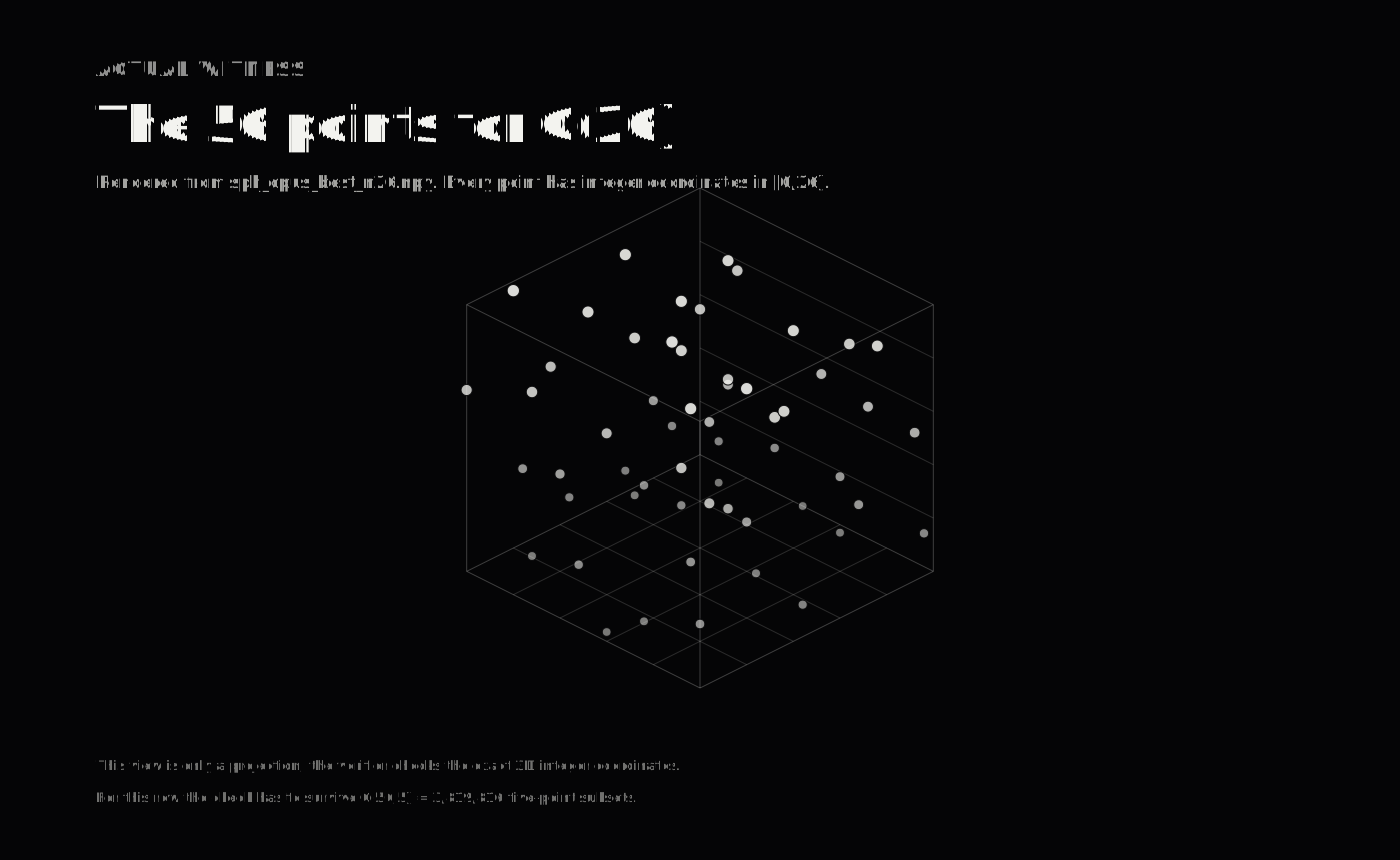
This result matters because the object is concrete. For each n, the claim is just a list of integer grid points. The set counts only if every group of five points avoids both failure modes: lying on one plane or lying on one sphere.
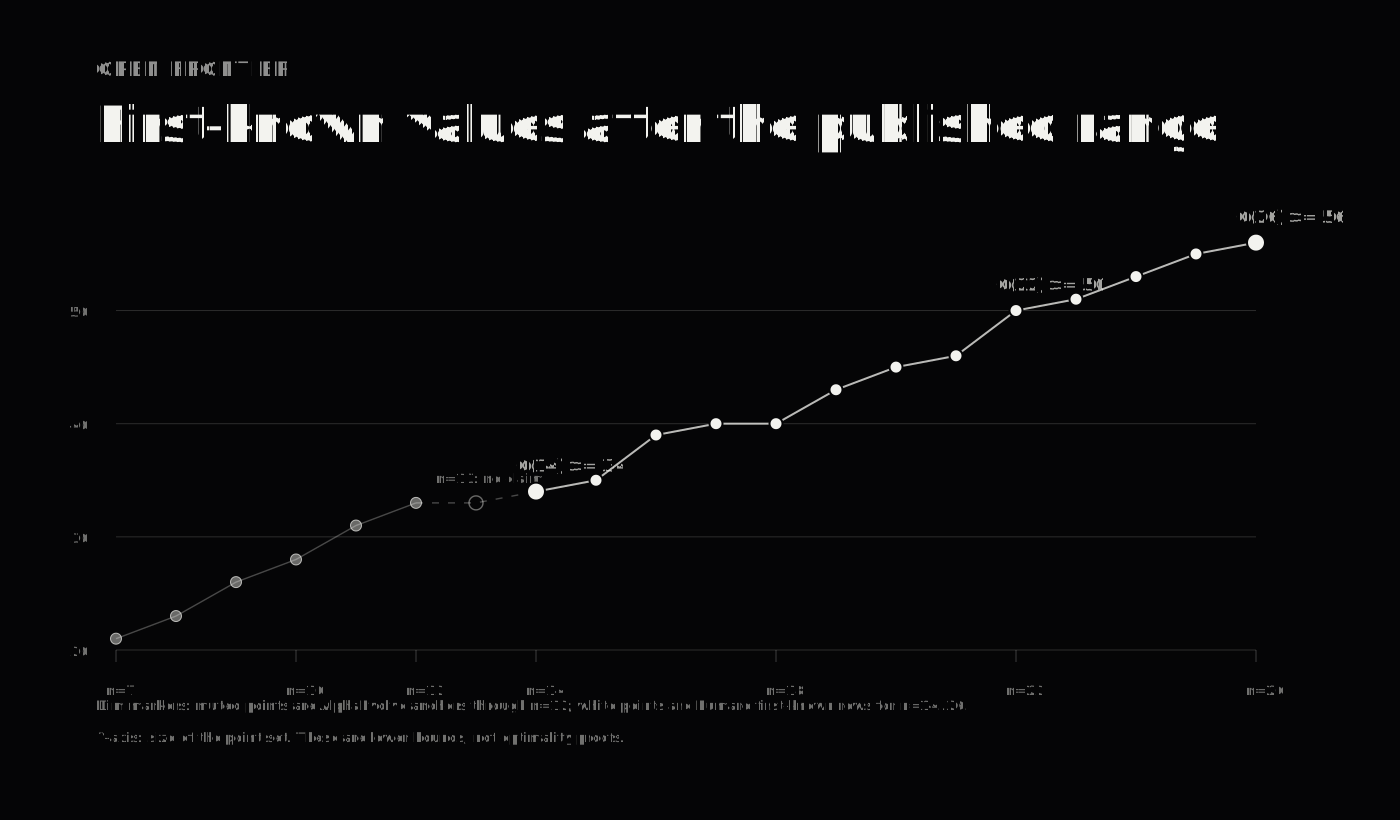
- AlphaEvolve published anchors through n=12. The campaign reproduced those anchors, but did not improve them.
- n=13 reached only the monotone floor from C(12), so it is not claimed.
- The first claimed row is C(14) >= 34, and the largest saved witness is C(26) >= 56.
Visual notes
How to read the result
Result table
Thirteen first-known lower bounds fill the open n=14-26 range.
| Cell | Baseline | Numaro | Delta | Note |
|---|---|---|---|---|
| C(14) | none listed | >=34 | first-known | first claimed row |
| C(15) | none listed | >=35 | first-known | integer-coordinate witness |
| C(16) | none listed | >=39 | first-known | integer-coordinate witness |
| C(17) | none listed | >=40 | first-known | integer-coordinate witness |
| C(18) | none listed | >=40 | first-known | integer-coordinate witness |
| C(19) | none listed | >=43 | first-known | integer-coordinate witness |
| C(20) | none listed | >=45 | first-known | integer-coordinate witness |
| C(21) | none listed | >=46 | first-known | integer-coordinate witness |
| C(22) | none listed | >=50 | first-known | integer-coordinate witness |
| C(23) | none listed | >=51 | first-known | integer-coordinate witness |
| C(24) | none listed | >=53 | first-known | integer-coordinate witness |
| C(25) | none listed | >=55 | first-known | integer-coordinate witness |
| C(26) | none listed | >=56 | first-known | largest listed n |
Method
How it was found
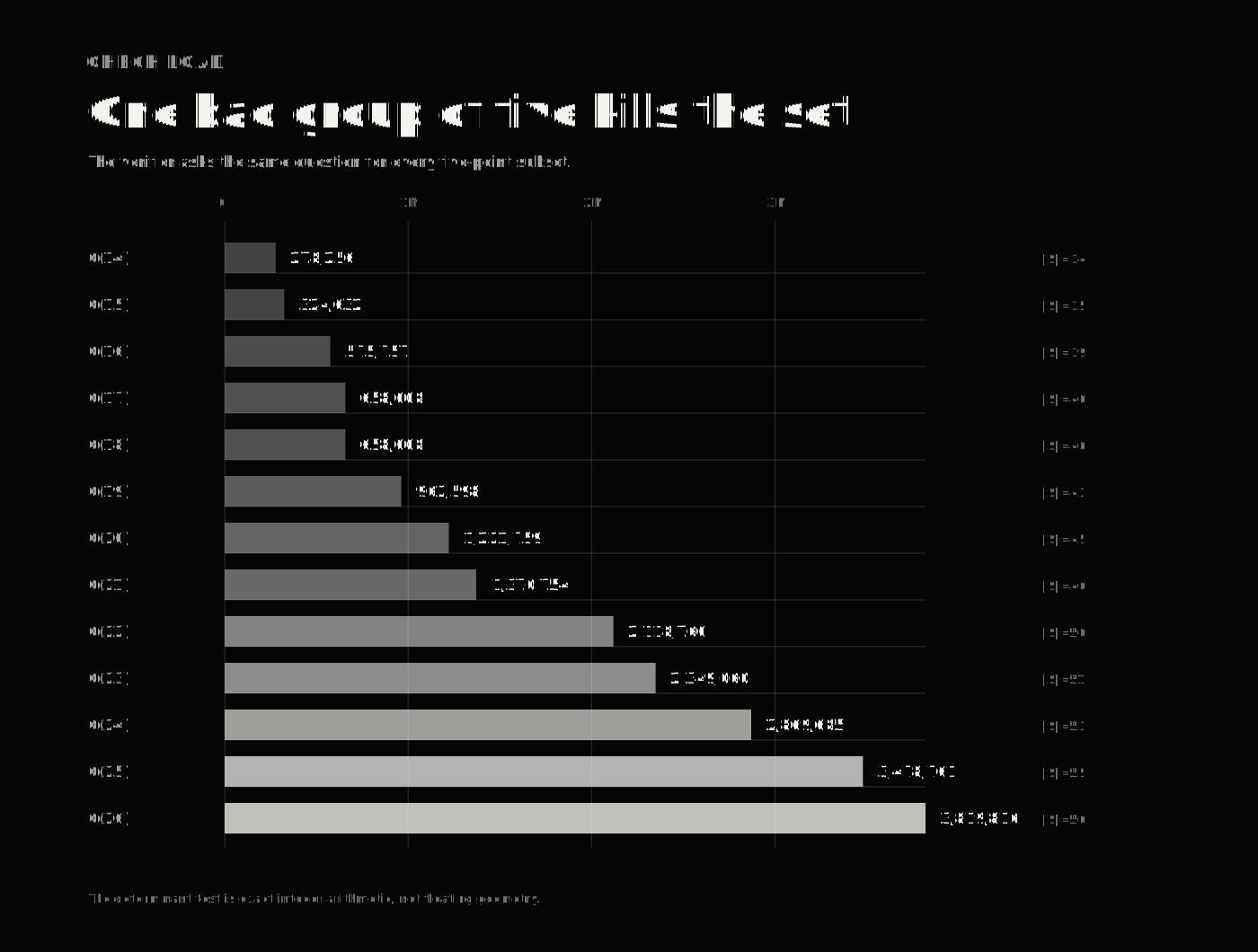
The campaign treated the count of bad five-point groups as the search signal. A candidate is valid only when that count reaches zero.
- Reproduced the published AlphaEvolve anchors C(11)=31 and C(12)=33 for calibration.
- For each open n, searched random integer point sets of increasing size.
- Used the number of coplanar or cospherical five-point subsets as feedback during search.
- Recorded only coordinate sets whose bad-five count reached zero.
Verification
How it was checked
The check looks at every group of five saved points. It uses an exact integer determinant: if the determinant is zero, those five points lie on one plane or one sphere. The reported sets have zero such groups; no floating-point geometry is used.
Scope
What is not being claimed
These are first-known lower bounds for open n values, not optimality proofs. They do not beat AlphaEvolve's published C(11) or C(12) values, and n=13 is not claimed because the search did not move past the monotone floor.
References
Baseline sources
Citation
How to cite
Numaro AI Autoresearch Team. "First-known no-five-on-sphere values for [n]^3." Numaro Research Report NUMARO-2026-009, 2026.
@techreport{numaro2026No5On,
  title = {First-known no-five-on-sphere values for [n]^3},
  author = {Numaro AI Autoresearch Team},
  institution = {Numaro},
  number = {NUMARO-2026-009},
  year = {2026},
  url = {https://numaro.tech/research/no-5-on-sphere-2026/}
}